
In today’s competitive digital landscape, traditional SEO strategies alone are no longer enough to keep up with the demand for content. Businesses are now expected to create large volumes of high-quality, search-optimised pages while maintaining consistency and relevance.
This is where programmatic SEO comes in.
Programmatic SEO is transforming how brands approach content creation by combining automation, data, and artificial intelligence. Instead of manually creating each page, businesses can scale thousands of pages efficiently-targeting long-tail keywords and capturing high-intent traffic at scale.
What Is Programmatic SEO?
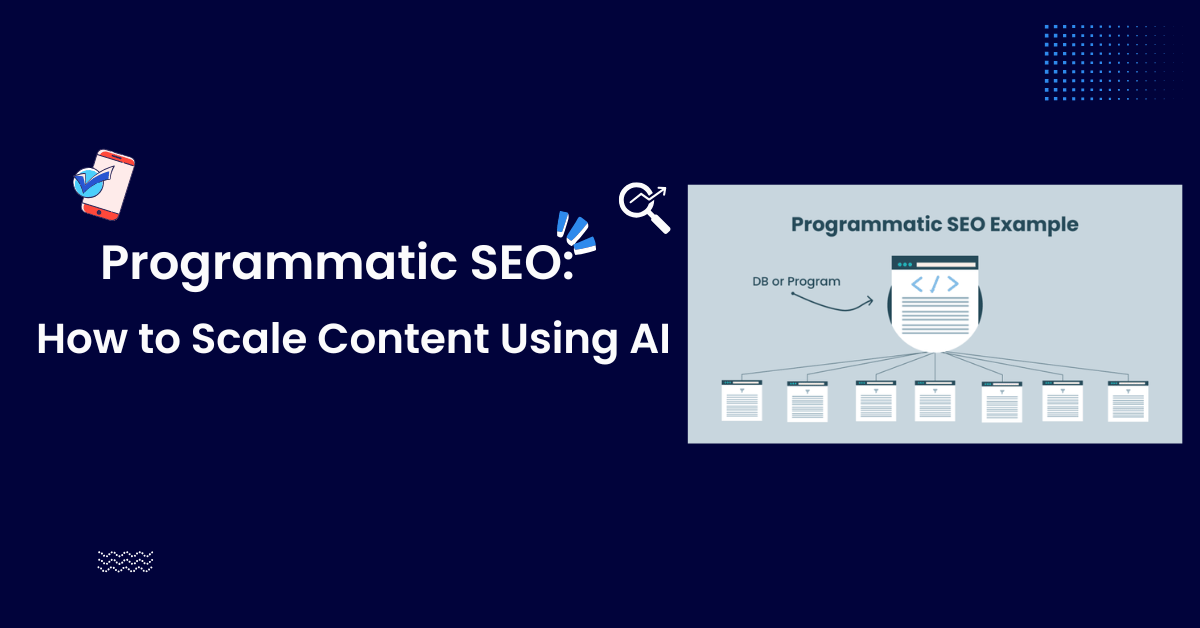
Programmatic SEO is the process of using automation and structured data to create large numbers of web pages targeting specific search queries.
Rather than writing every page manually, you:
- Build a template
- Use data inputs (keywords, locations, services, etc.)
- Generate pages dynamically
For example:
- “SEO services in Dublin”
- “SEO services in Cork”
- “SEO services in Galway”
Each page follows the same structure but targets a different keyword variation.
Why Programmatic SEO Matters in 2026
Search behaviour has evolved significantly. Users are now searching for:
- More specific queries
- Localised results
- Detailed, intent-driven answers
This creates an opportunity to target long-tail keywords at scale.
Key benefits:
- Capture thousands of search queries
- Increase organic traffic quickly
- Reduce manual workload
- Improve topical authority
With AI tools, this process has become faster and more efficient than ever before.
How AI Powers Programmatic SEO
Artificial intelligence plays a central role in making programmatic SEO scalable and effective.
AI helps with:
- Keyword clustering and research
- Content generation
- Data structuring
- Content personalisation
Using tools like ChatGPT or similar AI platforms, businesses can generate content variations while maintaining quality and relevance.
However, AI should be used as a support tool not a complete replacement for human oversight.
Step-by-Step: How to Implement Programmatic SEO
1. Identify Scalable Keyword Opportunities
Start by finding keyword patterns that can be expanded.
Examples:
- “Best [service] in [location]”
- “[product] for [use case]”
- “[tool] comparison”
Use SEO tools to identify:
- Search volume
- Keyword variations
- User intent
The goal is to find repeatable structures.
2. Build a Page Template
Your template should include:
- SEO-optimised headings
- Intro and conclusion sections
- Dynamic sections (based on data)
- Internal linking
A strong template ensures:
- Consistency across pages
- Better indexing by search engines
- Easier scalability
3. Create a Structured Database
Programmatic SEO relies heavily on data.
Your dataset might include:
- Locations
- Services
- Product features
- FAQs
This data feeds into your templates to generate unique pages.
4. Use AI to Generate Content
AI can help you:
- Write variations of content
- Expand descriptions
- Create FAQs
- Optimise for keywords
However:
- Avoid duplicate content
- Ensure each page adds value
- Edit and refine AI outputs
Quality still matters Google prioritises helpful content.
5. Automate Page Creation
You can use:
- CMS platforms
- No-code tools
- Custom scripts
These tools allow you to:
- Generate hundreds or thousands of pages
- Publish them efficiently
- Maintain consistency
6. Optimise for SEO Best Practices
Even with automation, SEO fundamentals remain critical:
- Unique meta titles and descriptions
- Proper heading structure
- Internal linking
- Fast page speed
Programmatic pages should not feel “automated” to the user.
7. Monitor and Improve
Once pages are live:
- Track rankings
- Analyse traffic
- Identify top-performing pages
Then:
- Improve underperforming pages
- Update content regularly
- Expand successful keyword clusters
Best Use Cases for Programmatic SEO
Programmatic SEO works best for:
- Local service businesses
- E-commerce websites
- Job boards
- SaaS platforms
- Directories
Examples:
- “HR consultancy in [city]”
- “Best cake shop in [location]”
- “Digital marketing agency for [industry]”
Future of Programmatic SEO
With the rise of AI and automation, programmatic SEO is becoming a core strategy for digital growth.
In the future:
- AI will improve content quality
- Search engines will prioritise intent over keywords
- Automation will become more advanced
Businesses that adopt early will have a strong competitive advantage.
Conclusion
Programmatic SEO is no longer just a trend it’s a powerful strategy for scaling organic growth.
By combining structured data, automation, and AI, businesses can:
- Target thousands of keywords
- Increase visibility
- Drive consistent traffic
However, success depends on balance. Automation should enhance your SEO efforts – not replace quality and strategy.
When done right, programmatic SEO can become one of the most effective ways to grow your online presence in 2026 and beyond.
FAQ’s
- What is programmatic SEO?
Programmatic SEO is a strategy that uses automation, templates, and structured data to create large volumes of SEO-optimised pages targeting multiple keywords.
- How does AI help in programmatic SEO?
AI helps generate content, analyse keywords, and scale page creation quickly while maintaining consistency and relevance.
- Is programmatic SEO safe for Google rankings?
Yes, as long as the content is valuable, unique, and user-focused. Low-quality or duplicate pages can negatively impact rankings.
- What types of businesses benefit most from programmatic SEO?
E-commerce, SaaS platforms, local service providers, and directories benefit the most due to their ability to target multiple keyword variations.
- What is the difference between programmatic SEO and traditional SEO?
Traditional SEO focuses on manually creating high-quality pages, while programmatic SEO uses automation to scale content across many keywords efficiently.
Comments are closed