
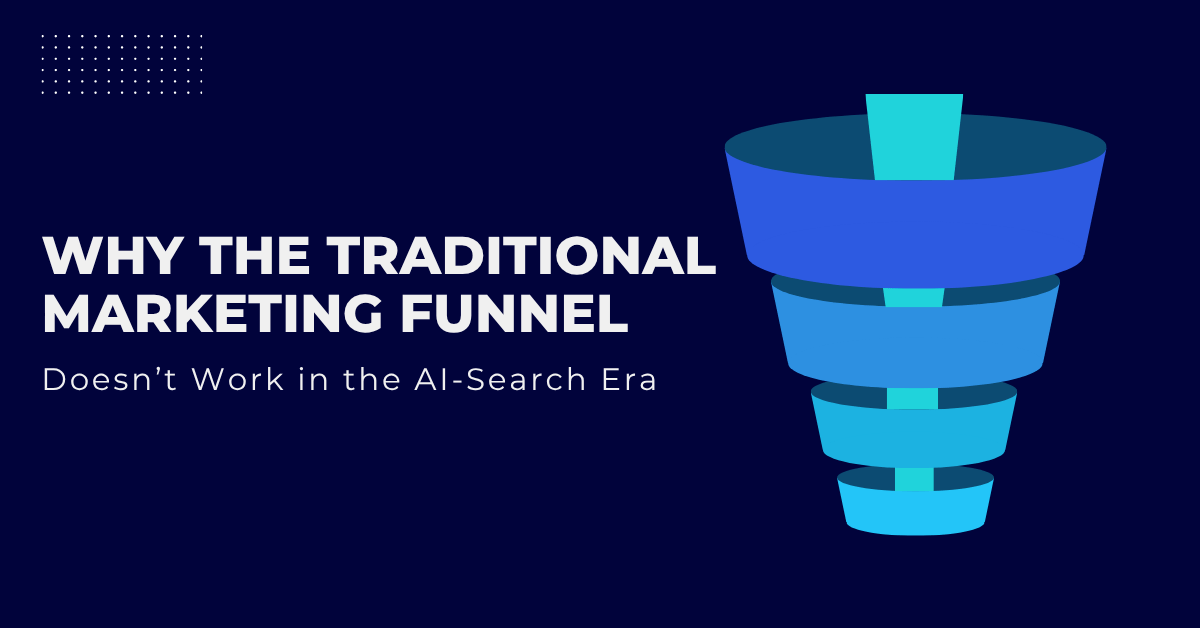
For decades, the marketing funnel was the go-to model for understanding how customers move from awareness to purchase. It gave marketers a clear structure: attract attention at the top, build interest in the middle, and drive conversions at the bottom. It made sense in a world where customer journeys were predictable, information sources were limited, and brand communication followed a one-way path.
But that world is long gone. Today’s consumers don’t follow a straight line. They’re not passively moving from one stage to another they’re jumping back and forth, comparing options across multiple channels, reading reviews, watching videos, and even using AI tools to get instant answers before making decisions. The modern buyer is more informed, connected, and empowered than ever before.
The result? The traditional marketing funnel once a cornerstone of marketing strategy is no longer an accurate reflection of how people actually buy. Businesses that still rely on it risk missing key engagement moments, misreading customer intent, and ultimately losing out to brands that better understand the new, non-linear path to purchase.
So, what’s changed and how can businesses adapt to this new reality?
1. The Linear Model Doesn’t Fit the Modern Customer
The classic funnel assumes customers move step by step: first they learn about your brand, then they show interest, consider options, and finally make a purchase. In reality, that’s not how it works anymore.
Today, the journey is fluid and unpredictable. Someone might discover your brand through a TikTok video, compare it with competitors via Google search, ask friends for recommendations on WhatsApp, and then make a decision after reading reviews on another platform.
Modern consumers bounce between channels and devices constantly. They explore, evaluate, and purchase in their own time, based on convenience and trust not based on your funnel design.
2. Information Overload Has Changed Decision-Making
In the past, marketers controlled the flow of information. A potential buyer relied on sales teams, brochures, or ads to learn about a product. Now, information is everywhere.
Customers can access hundreds of reviews, tutorials, and comparison tools instantly. They don’t need to wait for your email sequence or retargeting ad they already have everything they need to make a decision at their fingertips.
This abundance of information means that decision-making is faster and more independent. People no longer follow your funnel because they don’t have to they build their own path.
3. The Rise of AI and Instant Answers
Artificial intelligence has transformed how people search, learn, and buy. Instead of typing long queries into Google, users can now ask AI chatbots or voice assistants for instant, summarised answers.
This shift means customers may skip entire stages of the traditional funnel. They can move from curiosity to decision in seconds because the information they need is condensed, verified, and presented instantly.
For marketers, this requires a complete mindset shift instead of trying to “pull” people through stages, the focus should be on being present wherever decisions happen. That means optimising content for clarity, authority, and visibility across multiple channels, not just awareness campaigns or conversion-focused ads.
4. Social Proof Replaces Brand Messaging
Trust no longer comes from brand slogans or carefully scripted ads. It comes from people.
Buyers today rely on real experiences reviews, recommendations, influencer opinions, and social conversations. Social proof has become one of the strongest drivers of purchasing decisions.
This completely disrupts the traditional funnel model. Instead of brands guiding the buyer through pre-defined stages, customers are guiding each other through shared experiences. The most effective marketing now happens between customers not between brands and customers.
5. Engagement Is Continuous, Not Sequential
In the funnel model, marketing ends when the customer buys. But in the modern landscape, the real journey begins after the purchase.
Customers expect ongoing engagement personalised emails, loyalty rewards, community spaces, and social media interactions. They want to feel connected to the brand beyond the transaction.
That’s why many businesses are replacing the funnel with a flywheel or loop model, where awareness, engagement, and retention feed into each other continuously. Every satisfied customer becomes an advocate who fuels new awareness, creating momentum instead of a linear drop-off.
6. Content Must Match Intent, Not Stage
Marketers used to create content for each funnel stage awareness blogs, middle-funnel guides, bottom-funnel offers. But customers don’t consume content in that order anymore.
What works now is intent-based marketing understanding what the customer wants in the moment and providing the right answer instantly.
For example, instead of pushing a generic awareness post, create useful, actionable content that solves real problems. Instead of waiting for someone to “move down” the funnel, meet them where they are with value-driven insights, tutorials, comparisons, or testimonials.
Intent is the new funnel. When you understand what people are looking for and respond with genuine help, you naturally build trust and that’s what leads to conversions.
7. Metrics Need to Evolve Too
Traditional funnel metrics impressions, clicks, and lead counts don’t tell the full story anymore. Success is no longer about how many people you push through each stage, but how deeply you connect with them.
Modern metrics focus on engagement, trust, and authority:
- How long do users stay on your page?
- Are they sharing your content?
- Do they mention your brand positively online?
- Does your brand appear in AI-generated summaries or voice search results?
These are the indicators that show real influence not just funnel movement.
8. Adapting to the New Buyer Journey
To succeed in this new environment, businesses must embrace flexibility and empathy. Here’s how:
- Be discoverable everywhere: Optimise for search, social, and AI tools.
- Prioritise trust: Gather reviews, case studies, and testimonials.
- Engage beyond conversion: Keep the conversation going post-purchase.
- Focus on human connection: Be authentic, transparent, and relatable.
- Create content that educates, not just sells.
The brands that adapt to this circular, dynamic journey where every touchpoint matters will outperform those stuck in outdated funnels.
Conclusion
The marketing funnel served its purpose in a simpler time. It helped businesses structure their outreach and understand customer progression. But today, it’s an oversimplified relic in a world that’s anything but simple.
Customers no longer move neatly from awareness to purchase. They discover your brand on one platform, research it on another, and make a decision after reading a stranger’s review or hearing an influencer mention it. They’re in control and they decide when and how to engage.
To thrive, marketers must let go of the idea of “pushing” people through a process and instead focus on meeting customers where they are. The goal isn’t to guide them down a funnel it’s to build genuine relationships that inspire trust, loyalty, and advocacy.
Modern marketing is circular, continuous, and customer-driven. The brands that recognise this and adapt their strategy around human behaviour, not outdated models will not only survive but lead in the next era of digital growth.
Comments are closed